
 ← All news
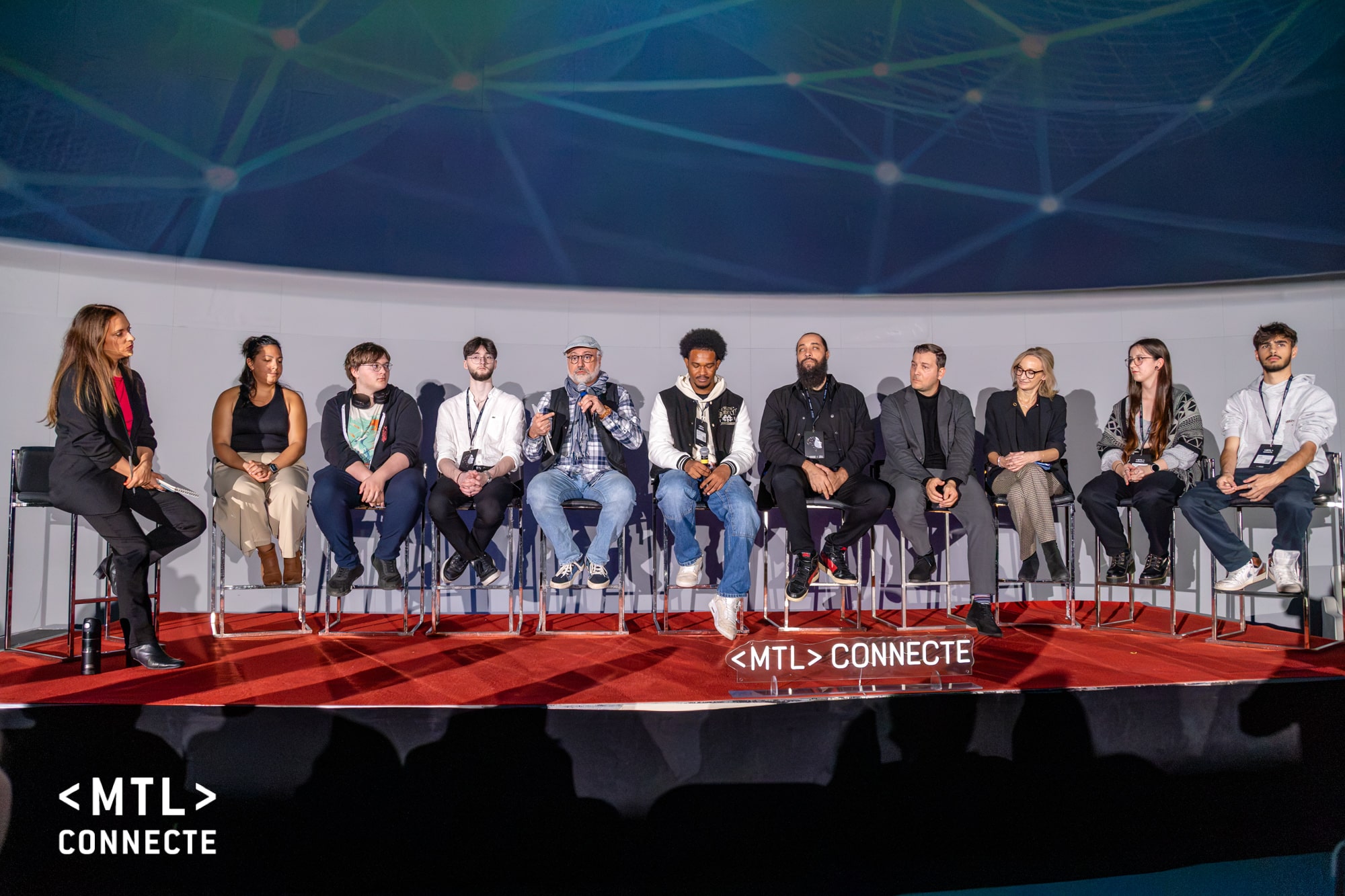
How is artificial intelligence transforming work and creativity? This was the central question of the second edition of the AI Societal Dialogues, held on October 14, 2026, as part of MTL connecte. Bringing together young people, experts and members of the public, the discussion placed the concerns of the next generation at the heart of the conversation: how can they navigate a world in which AI is playing an increasingly prominent role, without giving up human creativity or the opportunities to learn and build a professional future?
Throughout the discussion, a broader question emerged: how can we take action today to help shape the digital futures we want?
Interested in the discussion? Watch the debate video.
Creativity: Is AI a Tool or a Threat to Artists?
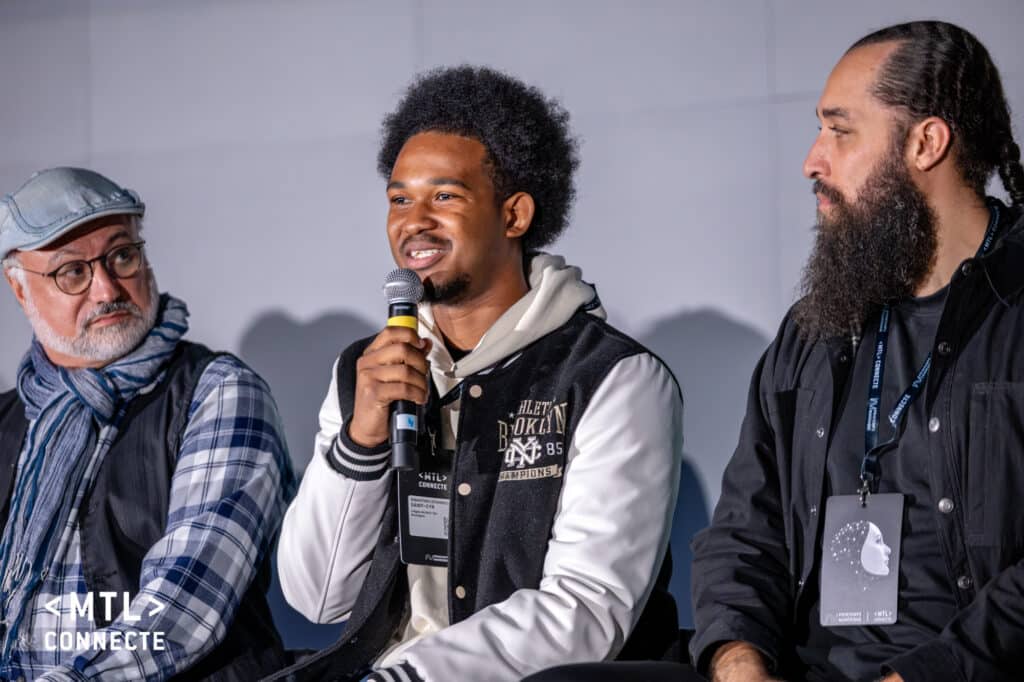
For Céleste Bergeron, an artist and student at Collège de Bois-de-Boulogne, the arrival of AI raises concerns that artists may feel pressured to adopt these tools, potentially losing some of the enjoyment and value associated with the creative process. Her classmate, Sébastien Saint-Cyr, offered a different perspective, highlighting the possibilities these technologies can bring.
Discussions with the experts helped put these perspectives into context. Yves Jacquier, Executive Director of Ubisoft La Forge, drew a parallel with the evolution of motion capture, which was initially perceived as a threat to animators before becoming an integrated tool in creative practices. Samy Lamouti, digital artist and creative director, also discussed practical applications of AI for solving technical challenges in production.
These conversations showed that the issue is not simply whether AI can create, but also how it can support creativity without overshadowing the human process behind it.
The Future of Work: What Prospects for the Next Generation?
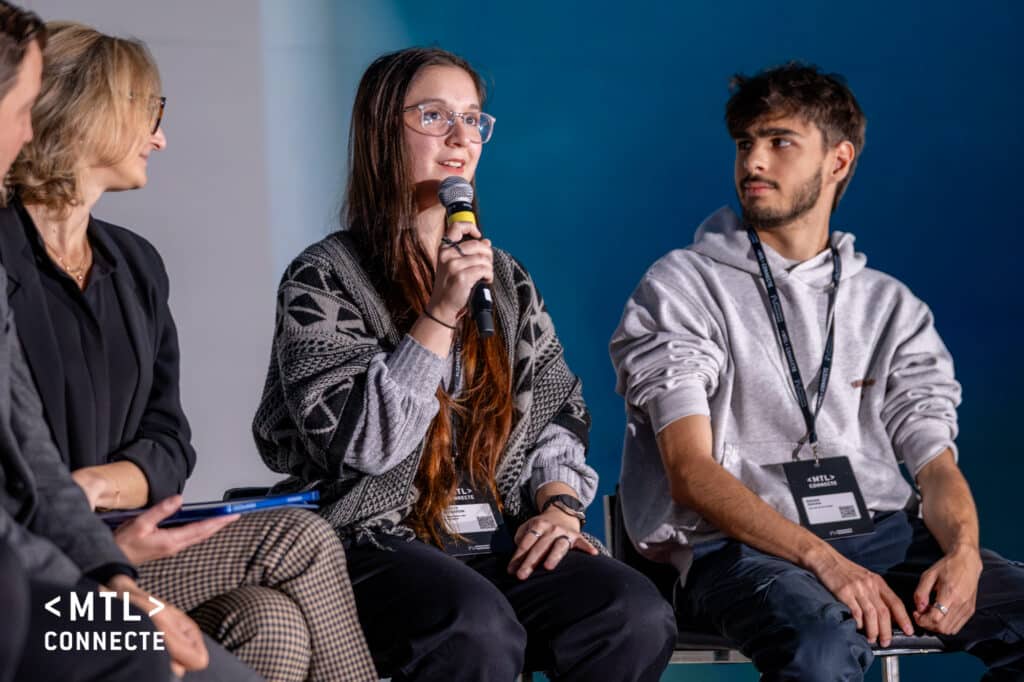
For young people at Collège de Bois-de-Boulogne, changes in the workplace bring both opportunities and uncertainty. Edgar Sadan sees AI as an opportunity to learn how to use new tools and access new professions. Lorenzo Charmeaux DeCaro, who is interested in the video game industry, questions what place will be available for junior talent and which pathways will help young people enter the industry.
Yves Jacquier raised an important question: if young people have fewer opportunities to learn through the tasks assigned to entry-level employees, how will organizations train the experienced professionals of tomorrow?
Sophie Fallaha, Executive Director of CEIMIA, emphasized the importance of adapting training, developing a critical understanding of AI and creating more opportunities for hands-on experience. This led to further discussion about the skills worth developing: curiosity, ethics, critical thinking, collaboration and the ability to learn.
Beyond the tools themselves, young participants were able to question the conditions that will allow them to find their place in a changing world of work.
Digital Sovereignty: Understanding in Order to Make Informed Choices
Digital sovereignty also sparked discussion about the priorities for developing AI and governing its use. During an exchange with members of the public and students, several approaches were debated: developing AI in Quebec, investing in training or strengthening regulation.
One participant emphasized the importance of oversight, highlighting the need for shared methods to assess the safety of AI systems. Sophie Fallaha noted that infrastructure, data, models and talent development must all progress in parallel.
The discussion also highlighted the importance of trust. Beyond rules and regulations, trust depends on verification mechanisms, certification and governance practices suited to different uses. For public institutions, as Alexandre Teodoresco, an advisor to the City of Montreal, pointed out, this responsibility is essential to maintaining public trust.
These conversations showed that choosing our digital futures also means thinking collectively about the technologies we develop, the data we use and the conditions under which we place our trust in them.
Giving Young People a Place in Digital Choices
By placing young people at the heart of the discussion, this edition of the AI Societal Dialogues brought forward concrete questions about their future: how can they learn, create, work and participate in a society transformed by artificial intelligence?
These conversations connect with a broader reflection that will continue at MTL connect 2027, whose theme will be “Act: Choosing Our Digital Futures.” Choosing our digital futures also means giving young people the means to understand the changes underway, question the choices shaping them and take part in decisions that affect them.
Thinking about the future of artificial intelligence is therefore not just about determining what technologies can accomplish. It is also about considering the place we want to give to people, skills and creativity in a changing society, and the collective actions that will help shape these futures.
This project is supported by theMinistère du Ministère de l’Économie, de l’Innovation et de l’Énergie (MEIE)and other partners as Parlons Techno, Luqia, LiteratIA and the Collège Bois-de-Boulogne.